
The switch is already underway on Australian farms
Irrigation pumps account for 25 to 35 per cent of on-farm diesel use in cropping and cotton regions, and they're ready to electrify now.
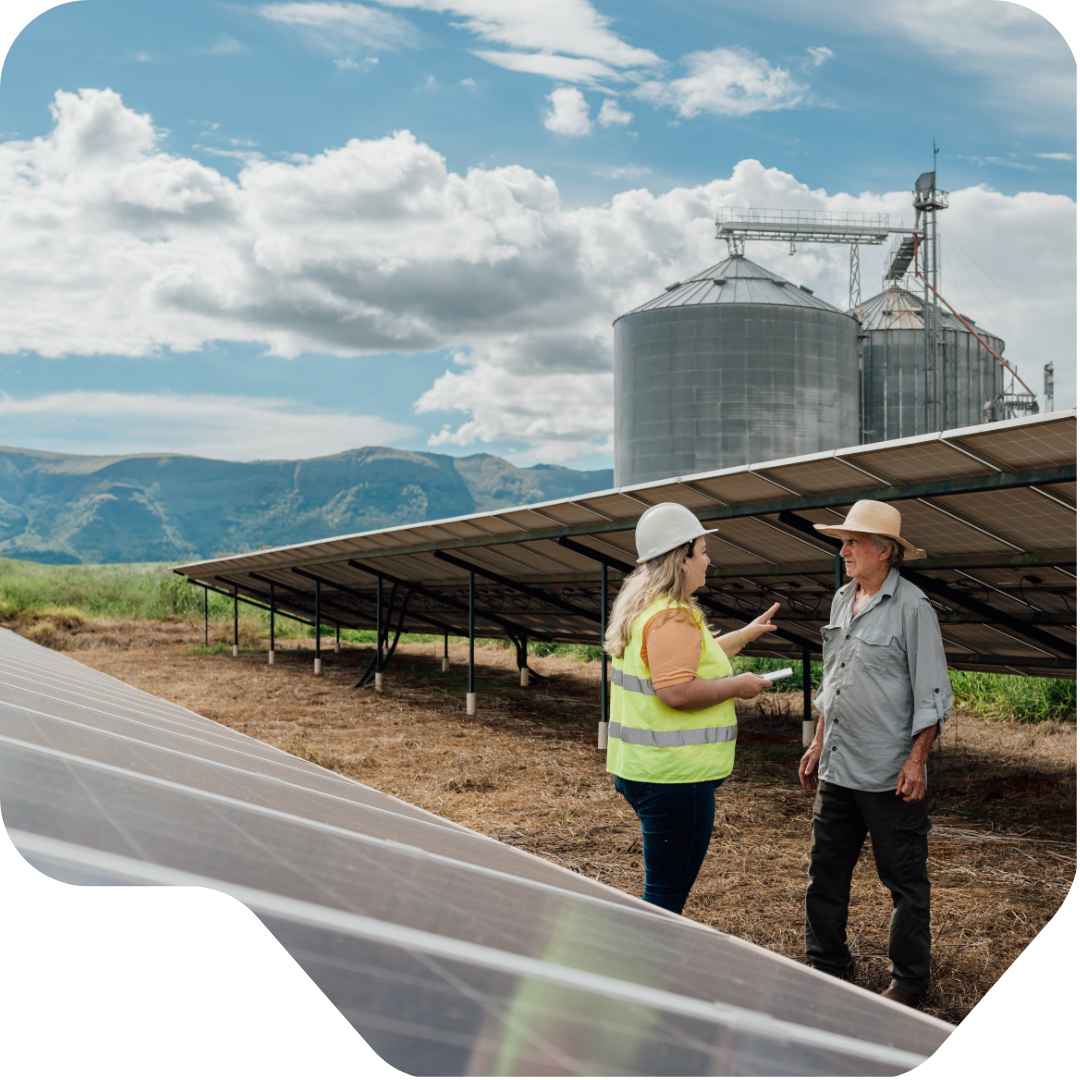
Sector opportunity: Electrify the equipment that's ready now
Farmers keep this country fed, and they do it through drought, flood and everything in between. But Australian farms run heavily on imported diesel, leaving families and communities exposed to volatile global oil markets that they cannot control. Electrifying farming equipment and powering day-to-day operations with affordable renewable electricity will cut costs, lift productivity and strengthen the resilience of Australia's agriculture.
25-35%
Irrigation pumps account for 25 to 35 per cent of on-farm diesel use in cropping and cotton regions, and they're ready to electrify now.
Efficient electric alternatives exist for refrigeration, processing, hot water and stationary power, all able to run on the solar and batteries farmers are already installing.
What's possible
Modelling* shows Australia can power a greater share of agriculture with electricity.
Today
Electricity share of energy use
By 2035
Electricity share of energy use by 2035

Electrified farming in Narromine
Karin Stark demonstrated how electrification and renewable energy can help Australian farmers cut costs, reduce emissions and improve the productivity of their operations.
Cotton grower Karin Stark was spending around $300,000 each year using diesel to pump water across their property near Narromine. Seeking a more cost-effective and sustainable solution, they began exploring how renewable energy and electrification could reduce their reliance on diesel. Their first step was installing a solar-diesel hybrid pumping system, which reduced fuel consumption and saved them around $180,000 in its first year of operation. While this delivered significant benefits, the absence of battery storage has limited the system's ability to optimise the use of renewable energy. Encouraged by these early results, Karin investigated the benefits of connecting their pumping infrastructure to the electricity grid. With support from their energy provider and an Accredited Service Provider, they assessed connection costs, payback periods and the most effective pathway to electrification. The results demonstrated a compelling business case. Using electricity to move water across the farm costs less than half as much as diesel, while reducing emissions by up to 70 per cent when combined with on-farm renewable energy generation. With an expected payback period of two to four years, the project offered clear financial and environmental returns. While grid connection costs and network constraints can present challenges for some farming businesses, electrification opens up significant opportunities for regional communities. Once connected to the grid, farms can adopt technologies such as battery storage and electric agricultural machinery and, in some cases, export surplus electricity to neighbouring properties. Case study credit: Essential Energy.

The policy ask
An Electrified Farming program would accelerate the switch for equipment where electric alternatives are already available and the savings are immediate, by offering: Funding to cover electrified farm equipment. A cluster demonstration to prove the switch at scale. Alongside the program, regulatory reforms would level the playing field between electricity and liquid fuels like diesel and biofuels, so farm businesses can export and share energy across property titles.
Support the installation of electrified farm equipment including irrigation pumps, refrigeration and processing equipment; this could be achieved by expanding the On Farm Connectivity Program, or a similar funding model such as the Small Business Energy Incentive.
Funding an ARENA-style cluster demonstration across 20 to 30 sites in a single irrigation district that integrates farm electrification, targeted network upgrades and integration with freight, proving the switch at scale and giving neighbouring farmers the confidence to follow.

Accelerate the shift to electrification already underway to build more productive, competitive and resilient Australian farms.
New 'Electrified farming' program to give farmers choice to replace equipment well suited to electrification. Remove regulatory barriers to on-farm energy sharing that do not exist for liquid fuels.
A platform for change
The barriers differ by sector. The answer is the same everywhere — clear policy signals, effective regulation and targeted incentives that reach the people and businesses currently locked out of the switch.
Put around $2,000 a year in savings within every household’s reach.
An Electrified Households package — new targeted and conditional Commonwealth funding for states, territories and councils to electrify rental properties, social housing, and First Nations and low-income households currently locked out of the switch.
Give manufacturers energy costs they can count on.
An Electrified Industry program targeting key subsectors to move to heat pumps for low temperature process heat. Alongside it, legislate a demand-side compliance mechanism into the Domestic Gas Reservation Scheme.
Back the switch already underway on Australian farms.
An Electrified Farming program to give farmers choice to replace equipment that is well suited to electrification. Alongside it, remove the regulatory barriers to on-farm energy sharing that do not exist for liquid fuels.
Stop importing the fuel that moves everything we buy.
Two programs, equally weighted. An Electrified Freight program to cut upfront costs for small and medium businesses. And an Accessible EVs program for new and second-hand cars and charging infrastructure for low-income households.
Signal where the energy system is heading, then build for it.
Issue an Australia’s Electric Future vision statement setting out the central role of electrification in every sector. Alongside it, set up Connecting the Suburbs and Connecting the Regions programs.
Take the tax thumb off the diesel scale.
Cap the diesel Fuel Tax Credit regime to incentivise electrification of mining equipment, while protecting the businesses that depend on it. Farmers and small and medium enterprises stay untouched.
Buildings that cost less to run, for owners and tenants alike.
An Electrified Commercial Buildings program that strengthens finance and procurement settings. Alongside it, accelerate the expansion of the Commercial Building Disclosure program.
Electrify Australia is a growing movement of consumer, business, civil society and research groups advocating for a national effort to accelerate electrification, to secure an affordable and resilient energy future for everyone.
Electrification means swapping gas, diesel and petrol for electric alternatives powered by renewables, so households, businesses and industry run on cheaper energy that's made in Australia.
* Footnote on modelling:
Electricity share of final demand for “Today” is 2023-24, the latest available data from the Australian Energy Update 2025. 2035 numbers are EEC calculations of agricultural electrification potential based on similar sectors modelled by Climateworks Centre for a scenario consistent with sourcing around 35% of Australia's final demand from electricity in 2035.