
Buildings that cost less to run, for owners and tenants alike
Commercial buildings account for around a quarter of Australia's electricity use, and too many still run central services on gas, locking tenants and owners into higher operating costs year after year.
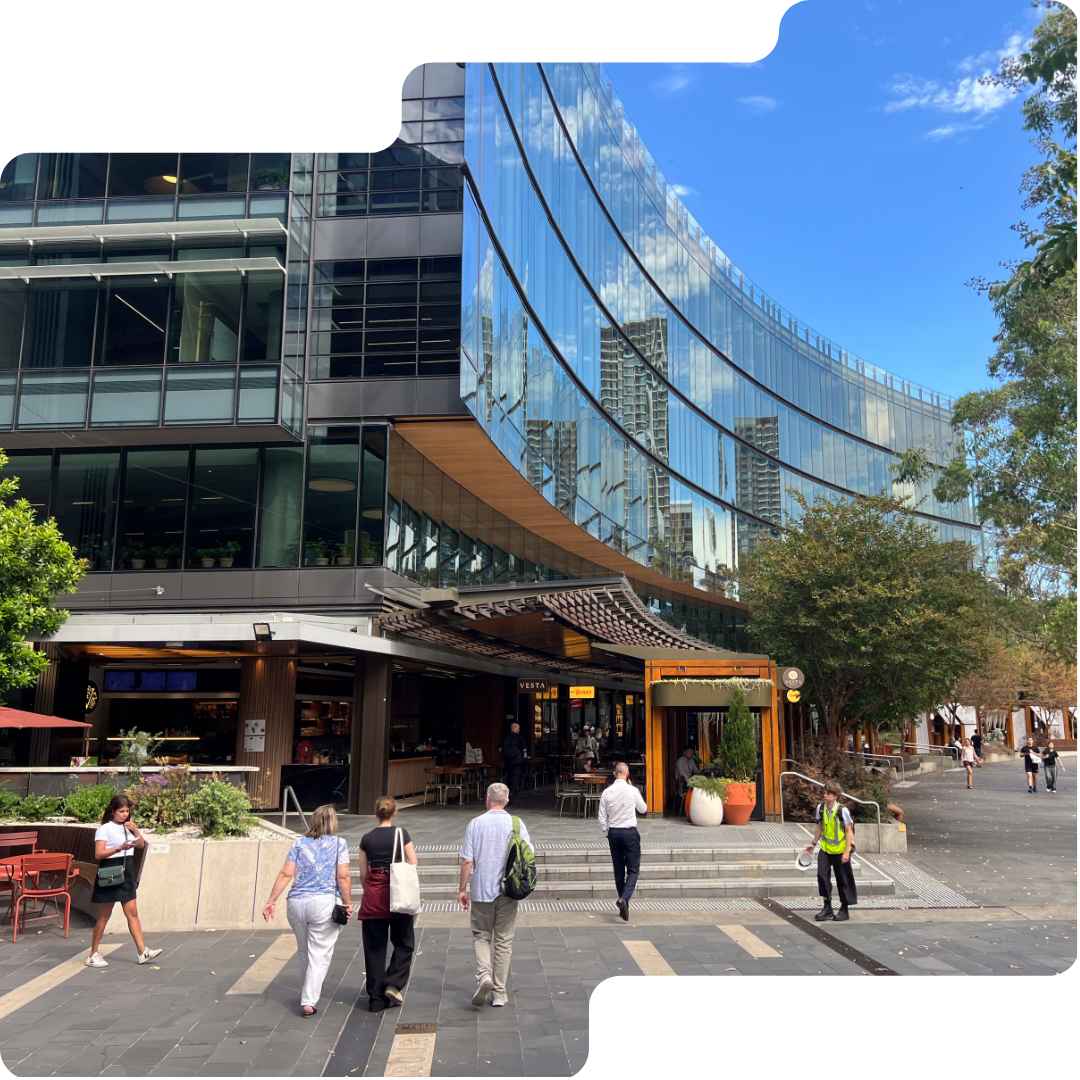
Sector opportunity: The opportunity is just as real as the barrier
The best commercial buildings are efficient and cheaper to run. Owners get a building that holds its value, tenants get lower costs, and everyone shares the benefit. Electrifying commercial buildings with efficient technologies cuts operating costs, lifts building values, and lets businesses run on affordable, Australian-made electricity. The final piece is visibility: what gets measured gets managed, and buildings that can show their performance will be the ones that win tenants, investors and value.
25%
Commercial buildings account for around a quarter of Australia's electricity use.
2035
Electrifying the Australian Government's own portfolio by 2035 would prove to the whole market that the switch from gas is achievable and economic.
What's possible
Modelling* shows Australia can power a greater share of commercial buildings with electricity.
Today
Electricity share of energy use
By 2035
Electricity share of energy use by 2035
Electrifying a landmark
101 Collins Street is demonstrating how existing commercial buildings can transition from gas to electric heating while maintaining performance and tenant comfort.
Completed in 1991, Melbourne's iconic 101 Collins Street was originally designed around gas-fired heating systems. As tenant expectations, carbon targets and standards evolved, the owners identified electrification to future-proof the asset and support its net zero ambitions. The project began by replacing gas-powered hot water systems with high-efficiency heat pumps, thermal storage and rooftop solar. Early results showed an 81 per cent reduction in energy consumption. Building on this success, the site undertook one of Australia's largest electrification projects, replacing gas-fired heating plant with electric heat pumps. The system delivers the high-temperature heating required by a 57-storey office tower while eliminating fossil fuels. Importantly, the transition was completed in an occupied office building without disrupting tenants or operations. The project demonstrates that even large existing buildings can successfully electrify. Case study credit: A.G. Coombs.
The policy ask
Commercial building electrification delivers economic, productivity, and emissions benefits. Realising this opportunity requires government leadership, investment signals, and greater transparency on building performance. A targeted 'Electrified Commercial Buildings' program would focus on: Finance and procurement settings that encourage businesses and government to electrify their assets. An accelerated expansion of the Commercial Building Disclosure program. An Electrified Commercial Buildings program complements existing programs designed to make urban infrastructure electricity friendly.
Four measures: 1) Accelerated depreciation of existing fossil gas equipment on the condition that the gas equipment is transitioned to all-electric. 2) Federal funding for demonstration projects that showcase proven upgrade pathways for complex and harder-to-electrify buildings. 3) A dedicated CEFC discounted lending pilot for businesses, focused on supporting electrification projects in mid-tier commercial buildings. 4)Government to commit to electrification of all existing assets by 2035, providing procurement settings that build market demand for electric building technologies, skilled trades and associated services.
Expansion would require energy performance disclosure across a broader range of building types, with a clear pathway to minimum energy performance standards and full electrification. Integrating the NABERS Renewable Energy Indicator (REI) into disclosure requirements, alongside phased minimum standards, would reward high-performing buildings, lift the rest, and give investors and tenants the transparency and certainty to back the switch.

Electrify commercial buildings to cut operating costs, for tenants and owners alike.
An 'Electrified Commercial Buildings' program that strengthens finance and procurement settings to encourage businesses and government to electrify their assets. Accelerate the expansion of the Commercial Building Disclosure program and require clear, consistent reporting of whether buildings are all electric.
A platform for change
The barriers differ by sector. The answer is the same everywhere — clear policy signals, effective regulation and targeted incentives that reach the people and businesses currently locked out of the switch.
Put around $2,000 a year in savings within every household’s reach.
An Electrified Households package — new targeted and conditional Commonwealth funding for states, territories and councils to electrify rental properties, social housing, and First Nations and low-income households currently locked out of the switch.
Give manufacturers energy costs they can count on.
An Electrified Industry program targeting key subsectors to move to heat pumps for low temperature process heat. Alongside it, legislate a demand-side compliance mechanism into the Domestic Gas Reservation Scheme.
Back the switch already underway on Australian farms.
An Electrified Farming program to give farmers choice to replace equipment that is well suited to electrification. Alongside it, remove the regulatory barriers to on-farm energy sharing that do not exist for liquid fuels.
Stop importing the fuel that moves everything we buy.
Two programs, equally weighted. An Electrified Freight program to cut upfront costs for small and medium businesses. And an Accessible EVs program for new and second-hand cars and charging infrastructure for low-income households.
Signal where the energy system is heading, then build for it.
Issue an Australia’s Electric Future vision statement setting out the central role of electrification in every sector. Alongside it, set up Connecting the Suburbs and Connecting the Regions programs.
Take the tax thumb off the diesel scale.
Cap the diesel Fuel Tax Credit regime to incentivise electrification of mining equipment, while protecting the businesses that depend on it. Farmers and small and medium enterprises stay untouched.
Buildings that cost less to run, for owners and tenants alike.
An Electrified Commercial Buildings program that strengthens finance and procurement settings. Alongside it, accelerate the expansion of the Commercial Building Disclosure program.
Electrify Australia is a growing movement of consumer, business, civil society and research groups advocating for a national effort to accelerate electrification, to secure an affordable and resilient energy future for everyone.
Electrification means swapping gas, diesel and petrol for electric alternatives powered by renewables, so households, businesses and industry run on cheaper energy that's made in Australia.
* Footnote on modelling:
Today” is 2023-24, the latest available data from the Australian Energy Update 2025. 2035 numbers are EEC analysis of a scenario based on Climateworks Centre Centre decarbonisation scenarios 2023: Paris Agreement alignment for Australia. This is consistent with sourcing around 35% of Australia's final demand from electricity in 2035.